
Long-Stay Housing: Are You Seeing the Full Picture?

A six-month project brings together relocating managers, a core project team, and rotating specialists. HR, operations, and individual business units each arrange housing independently, using different suppliers, criteria, and rates. As the corporate travel buyer, how much of that activity is visible to you?
For many organizations, this is how long-stay housing works. A growing number of organizations are sending employees and contractors where they are needed, whether for project assignments, temporary roles, training programs, or relocations, creating demand for flexible accommodations that support daily life away from home. Extended-stay properties now account for 40% of the U.S. hotel construction pipeline, up from 26% in 2017, according to Lodging Econometrics’ Q3 2026 report.
The hospitality industry increasingly uses the term “long stay” to describe accommodation needs that cut across lodging segments, including extended-stay hotels, apartment-style properties, furnished apartments, and other options. “The focus is shifting from the lodging product to the traveler’s purpose and needs,” says Laura Christian, Assistant Managing Director of Business Travel Sales for Hilton.
Since long-stay housing is often shaped by the work happening behind the stay, the challenge for many corporate travel managers is that sourcing and booking can fall outside a traditional managed-travel program. HR might coordinate relocations while Operations arranges housing for project teams. Business units may separately source accommodations for consultants, specialists, or temporary staff. The category is often “highly decentralized, fragmented, and siloed,” Christian says, with similar traveler needs addressed through different channels, suppliers, and selection criteria.
This fragmentation creates an opportunity. Greater visibility into long-stay activity can help companies improve traveler support, strengthen duty of care, establish more consistent sourcing practices, and make better use of their purchasing power. For travel managers, it also offers a way to bring structure and strategy to a category that often exists outside traditional travel programs.
What’s Driving Demand?
Long-stay demand is shaped by business and economic forces. Fifty-four percent of companies report increased employee relocations, and 52% expect that trend to continue, according to Atlas Van Lines’ 2026 Corporate Relocation Survey. Labor shortages, business growth, and housing market conditions are among the factors driving that trend.
Workforce mobility now takes many forms. Beyond relocation, business trends are driving more project-based assignments, rotational programs, internships, and other temporary deployments, according to the Corporate Housing Providers Association.
As stays lengthen, cooking, laundry, exercise, and transportation become more important for the traveler. The longer the assignment, the more an accommodation functions as a temporary home, not just a place to sleep. At the same time, companies also need reliability and flexibility as plans shift, and security and on-site support remain critical for duty of care.
"When an assignment takes someone away from home for days, weeks, or months, the right accommodation can make a real difference in how they experience that time," says Michael Snapkoski, Global Brand Leader with Apartment Collection by Hilton. "People want more space and the ability to maintain everyday routines while they're away. Apartment-style stays can help meet those needs, which is why they're an important part of the long-stay conversation."
Long-Stay Strategy: Key Considerations
Gaining visibility is the first step. Use this four-part framework to identify long-stay activity across your organization and support opportunities to manage accommodations more strategically.
1. Understand Demand Profile
- Work with your accommodation suppliers: How many long-stay room nights are booked each year, where are travelers staying, and what is the average length of stay?
- Which departments, projects, or programs are generating long-stay demand?
- Determine how much is spent annually on long-stay accommodations, and how much of that spend is visible today in the travel program?
2. Align Oversight and Ownership
- Who is responsible for sourcing and booking, and are stays managed through the corporate travel program, independently by each department, or through third parties?
- Which suppliers and property types are used most often, and have any departments established preferred supplier relationships?
- How do the company's sourcing criteria account for assignment length, changing timelines, and traveler needs?
3. Match Sourcing to the Assignment
- Who are the primary traveler populations?
- What does a successful stay look like for each traveler group, and which services, amenities, or support are essential to meeting their needs?
- How are duty-of-care responsibilities managed across different accommodation types?
Pro Tip: Interview employees and contractors who have completed long-term assignments. Their feedback can help identify the services, amenities, and accommodations that matter most, leading to more informed sourcing decisions.
4. Measure Business and Traveler Opportunity
- Where could greater visibility and setting standards or guidelines improve outcomes for travelers, for departments, and for the company?
- How might a preferred-supplier strategy improve service, consistency, or value?
- How could coordination and partnership with preferred suppliers help better support long-stay traveler needs?

Putting Insights Into Action
This assessment is likely to reveal a mix of suppliers, accommodation types, and sourcing practices across the organization. It may also raise questions about whether the accommodations being used are aligned with the company’s objectives.
Long-stay business is already happening across the company; making it more visible is the opportunity.
Key suppliers, like Hilton, can help clarify existing stay patterns, traveler needs, and sourcing practices. Combined with this assessment, those insights can strengthen sourcing and duty of care, help travelers feel supported away from home, and ensure departments have the right partners and accommodations. Greater visibility and strong supplier partnerships can replace fragmented activity with a coordinated approach that delivers value across the company.
Hilton’s Long-Stay Portfolio
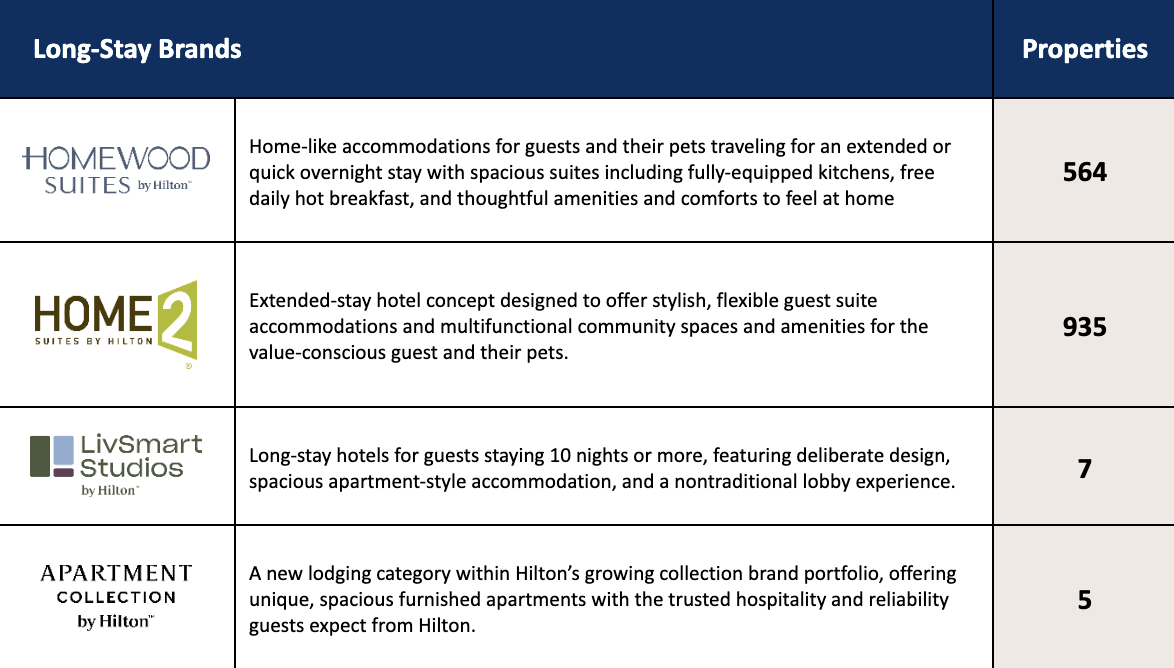
Hilton has expanded its portfolio to support a range of assignment types, traveler preferences, and lengths of stay. The chart below can help match accommodations to the traveler profiles and priorities identified in Step 3 of the assessment framework.
To learn how Hilton can support your long-stay program, contact your Hilton Worldwide Sales representative.